
The world of Pokémon is a global phenomenon, but its roots are deeply embedded in the Japanese language and culture. The names of Pokémon, their pronunciations, and the subtle nuances behind them are not merely arbitrary labels; they are carefully crafted words that often reflect the creature’s appearance, behavior, or the concepts they embody. For anyone interested in the linguistic artistry behind these characters, exploring “Pokémon tiếng Nhật” offers a fascinating glimpse into how language, imagination, and tradition intersect in one of the most successful media franchises of all time.
Origins and Historical Context
Pokémon was created by Satoshi Tajiri in the early 1990s, inspired by his childhood hobby of collecting insects. The original video games, titled “Pokémon Red and Green” (known in Japan as “Pocket Monsters: Red and Green”), were released for the Nintendo Game Boy in 1996. From the outset, the developers at Game Freak paid meticulous attention to the naming of each creature. The Japanese language, with its rich inventory of kanji, hiragana, and katakana, provided a versatile palette for creating names that were both evocative and memorable.
In Japanese, many Pokémon names are compound words, blending elements that describe physical traits, behaviors, or the concepts they embody. For instance, the name “Pikachu” combines “pika” (the sound of an electric spark) and “chu” (the sound of a mouse squeak), effectively capturing the electric nature of the creature. Similarly, “Fushigidane” (the Japanese name for Bulbasaur) merges “fushigi” (mysterious) with “dane” (seed), hinting at the plant-like bulb on its back.
Linguistic Features of Japanese Pokémon Names
Use of Kanji and Kana
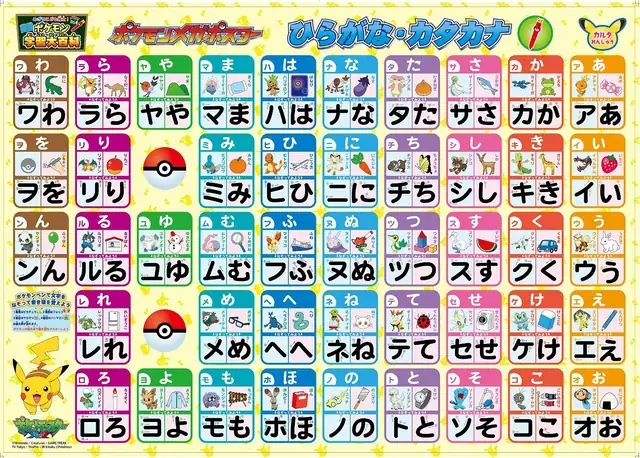
A significant number of Pokémon names are written using a combination of kanji (Chinese characters) and kana (syllabic scripts). Kanji often convey meaning, while kana may indicate pronunciation or onomatopoeic sounds. For example, “Mewtwo” is written as “ミュウツー” in katakana, emphasizing its status as a genetically engineered being, while “Mew” is “ミュウ”, a simpler representation of the mythical creature.

Có thể bạn quan tâm: Top 10 Khóa Học SOFL Tiếng Nhật Chính Thức Tại Việt Nam Năm 2026 – Cập Nhật Mới Nhất
Onomatopoeia
Japanese is renowned for its extensive use of onomatopoeic expressions, and Pokémon names frequently employ this technique. “Pikachu” is a prime example, where “pika” mimics the crackling of electricity and “chu” resembles the squeak of a small animal. Another instance is “Gengar”, whose name may derive from “gen” (illusion) and “gar” (a play on the English word “ghoul”), creating a ghostly connotation.
Compound Words and Portmanteaus
Many Pokémon names are portmanteaus, blending two words to create a new meaning. “Butterfree” combines “butterfly” and “free”, suggesting a creature that is both graceful and liberated. In Japanese, this is “バタフライ”, which directly transliterates the English words, illustrating how global influences can merge with native linguistic patterns.
Cultural and Mythological References
The naming of Pokémon often draws upon Japanese folklore, mythology, and cultural symbols. For example, “Raikou” is derived from “rai” (thunder) and “kou” (lightning), reflecting its electric type and its association with the Japanese thunder god, Raijin. Similarly, “Lugia” may be inspired by the legendary bird “Lugia” from Japanese mythology, embodying the concept of a guardian of the seas.
These references serve not only to enrich the narrative but also to embed the creatures within a familiar cultural framework for Japanese players. When the games were localized for international audiences, translators faced the challenge of preserving these cultural nuances while making the names accessible and appealing to a global audience.
Có thể bạn quan tâm: Sách Học Tiếng Nhật Cho Người Mới Bắt Đầu: Đánh Giá, Xu Hướng 2026 Và Cách Chọn Sách Tốt Nhất
Translation and Localization Challenges
The process of translating Pokémon names from Japanese to other languages involves balancing fidelity to the original meaning with the need for cultural relevance. In English, many names were altered to better resonate with Western audiences. For instance, “Fushigidane” became “Bulbasaur”, focusing on the bulbous appearance rather than the mysterious seed concept.
Conversely, some names were kept largely unchanged, such as “Pikachu”, which achieved iconic status worldwide. The decision to retain or modify a name often depends on factors like phonetic similarity, ease of pronunciation, and potential brand recognition.
Strategies Employed by Translators
- Direct Transliteration: Retaining the original Japanese pronunciation, as seen with “Pikachu” and “Eevee”.
- Semantic Translation: Conveying the meaning of the original name, e.g., “Fushigidane” → “Bulbasaur”.
- Creative Adaptation: Creating a new name that captures the essence while being culturally appropriate, such as “Mewtwo” remaining unchanged due to its unique identity.
These strategies illustrate the complexity of localization, where linguistic accuracy must be weighed against marketability and cultural sensitivity.
Impact on Global Fandom
The evolution of Pokémon names has significantly influenced the global fandom. Iconic names like “Pikachu”, “Charizard”, and “Mewtwo” have become household terms, transcending language barriers. The consistency in naming across media—video games, anime, trading cards, and merchandise—has reinforced brand identity and facilitated a cohesive fan experience.

Có thể bạn quan tâm: Phường Tiếng Nhật Là Gì? Tìm Hiểu Về Đơn Vị Hành Chính Và Địa Chỉ ‘phường’ Trong Văn Hóa Và Hệ Thống Địa Chỉ Nhật Bản
Moreover, the study of Japanese Pokémon names has sparked interest in the Japanese language among fans worldwide. Many enthusiasts learn basic Japanese to better understand their favorite creatures, turning a hobby into an educational pursuit. Online communities often discuss the etymology of names, fostering a deeper appreciation for the linguistic craftsmanship involved.
Case Studies of Notable Pokémon
Pikachu
Perhaps the most recognizable Pokémon, Pikachu’s name is a perfect example of onomatopoeia. In Japanese, “pika” denotes the sound of an electric spark, while “chu” is the squeak of a mouse. This dual-layered naming not only describes the creature’s electric type but also hints at its rodent-like appearance. The name’s simplicity and catchiness have contributed to its enduring popularity.
Eevee and Its Evolutions
Eevee, known as “Eevee” in both Japanese and English, is unique due to its multiple evolution forms. The Japanese names of its evolutions—”Flareon” (フレアロン), “Jolteon” (ジョルテオン), “Vaporeon” (ボルケノン)—combine elements of English words with Japanese phonetics. This blend reflects the franchise’s global reach and the flexibility of its naming conventions.
Mewtwo

Có thể bạn quan tâm: N4 Tiếng Nhật Là Gì? Tổng Quan, Cấu Trúc Và Hướng Dẫn Học Tập Năm 2026
Mewtwo’s name, “ミュウツー”, combines “Mew” (ミュウ) with “two” (ツー), indicating its creation as the second artificial Mew. The name’s construction emphasizes its engineered origin, setting it apart from naturally occurring Pokémon. The retention of the Japanese name in English underscores the creature’s iconic status.
Educational and Linguistic Insights
Analyzing Pokémon names offers valuable insights into Japanese morphology and semantics. Students of Japanese can use these names as mnemonic devices to learn vocabulary, kanji, and pronunciation. For example, the name “Kabuto” (カブト) means “helmet”, linking the Pokémon’s shell-like appearance to the word for head protection.
Furthermore, the naming patterns reveal how Japanese creates compound words, often merging descriptive elements into a single term. This process mirrors natural language evolution, where words adapt to convey new concepts efficiently.
Future Trends and Considerations
As the Pokémon franchise continues to expand, new generations of Pokémon are introduced, each with its own set of names. Emerging trends include:
- Incorporation of Regional Dialects: Some newer Pokémon draw inspiration from regional Japanese dialects, adding diversity to the naming pool.
- Global Collaboration: With the increasing involvement of international developers, there may be a greater blend of linguistic influences, leading to hybrid names.
- Digital and Virtual Pokémon: In augmented reality games like Pokémon GO, names are optimized for quick recognition and pronunciation, potentially simplifying traditional naming conventions.
These developments suggest that the evolution of Pokémon names will remain dynamic, balancing tradition with innovation.
Conclusion
The study of “Pokémon tiếng Nhật” reveals a rich tapestry of language, culture, and creativity. Each name is a microcosm of Japanese linguistic techniques, reflecting centuries of cultural heritage while adapting to contemporary global contexts. By delving into the etymology and translation of these names, fans and scholars alike can gain a deeper appreciation for the artistry that underpins the Pokémon universe. Whether you are a seasoned trainer or a curious learner, exploring the Japanese origins of Pokémon offers a rewarding journey into the heart of one of the world’s most beloved franchises.
Beyond the immediate entertainment value, the naming conventions of Pokémon have drawn the attention of linguists and educators. Studies conducted in Japan and abroad suggest that the repetitive and patterned nature of these names can serve as an effective tool for language learners. For instance, the use of consistent syllable structures in names such as “Pikachu”, “Eevee”, and “Gengar” helps learners internalize the rhythm of Japanese phonology. Moreover, the semantic transparency of many names—where components directly refer to observable traits—creates a bridge between vocabulary and visual imagery, enhancing recall.
The economic implications of these names should not be overlooked. Branding strategies rely heavily on the memorability and distinctiveness of each Pokémon’s appellation. Market research has shown that names that are easy to pronounce and remember, like “Charizard” or “Mewtwo”, tend to achieve higher merchandise sales. Conversely, more obscure names may limit consumer recognition, prompting companies to simplify or adapt them for international markets.
From a cultural perspective, the evolution of Pokémon names reflects broader trends in globalization. As the franchise expands into new regions, localizers often blend native linguistic elements with established Japanese roots. In the Spanish version, for example, “Pikachu” remains unchanged, but “Fushigidane” is rendered as “Bulbasaur”, illustrating a compromise between fidelity and accessibility. This dynamic illustrates how language acts as both a barrier and a conduit for cross-cultural exchange.
Looking forward, emerging technologies such as artificial intelligence and machine learning are beginning to influence the naming process. Algorithms can generate potential names by combining morphemes from a database, offering designers a spectrum of options that balance creativity with brand consistency. As virtual reality and interactive experiences become more prevalent, the demand for names that are instantly recognizable across multiple sensory modalities will likely increase, further shaping the future of Pokémon nomenclature.