The phrase “Happy Birthday” is universally recognized, yet its expression in Japanese carries nuances that reflect the language’s deep respect for formality, context, and cultural tradition. When one asks “Chúc mừng sinh nhật tiếng Nhật là gì?”—which translates to “What is ‘Happy Birthday’ in Japanese?”—the answer is not a single static expression but a spectrum of phrases that vary according to the relationship between speaker and listener, the setting, and the degree of politeness required. In this comprehensive guide, we will explore the most common ways to convey birthday wishes in Japanese, examine the grammatical structures behind them, delve into the cultural significance of birthdays in Japan, and provide practical advice on how to choose the appropriate expression in 2026 and beyond.
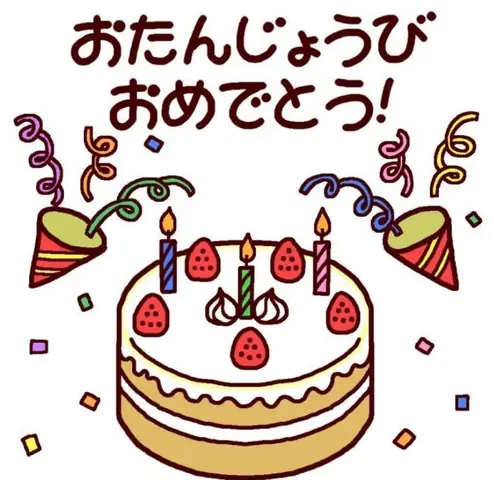
The most widely used and safest way to say “Happy Birthday” in Japanese is 「お誕生日おめでとうございます」 (omedetō gozaimasu). This phrase is considered polite and is suitable for almost any situation, especially when addressing someone you do not know well, a colleague, or an elder.
お誕生日 (otanjōbi) – “birthday,” with the respectful prefix お (o).
おめでとう (omedetō) – “congratulations,” derived from the verb めでたい (medetai), meaning “to be congratulatory.”
ございます (gozaimasu) – the polite copula, equivalent to “is” or “to be,” adding a formal tone.
When spoken, the phrase carries a warm, respectful tone. In written form, it can be used in emails, greeting cards, or social media messages. For example:
「お誕生日おめでとうございます。あなたが生まれた日は、世界に光を添えました。」
(“Happy Birthday. The day you were born added light to the world.”)
Có thể bạn quan tâm: Chào Mừng Tiếng Nhật 2026: Hành Trình Chinh Phục Ngôn Ngữ Mặt Trời Mọc Từ Con Số Không
Among friends, family members, or peers, a more casual version is often employed: 「誕生日おめでとう」 (tanjōbi omedetō). Omitting the respectful prefix お and the polite ending ございます creates an intimate, friendly tone.
誕生日 (tanjōbi) – “birthday” without the honorific prefix.
おめでとう (omedetō) – same as above.
This form is appropriate when texting a close friend, posting on a personal blog, or speaking to a sibling. It conveys warmth without the formality that might feel distant.
3. Using the English Loanword: 「ハッピーバースデー」
In contemporary Japan, especially among younger generations and in urban settings, the English phrase 「ハッピーバースデー」 (happī bāsudē) is frequently used. This loanword is often heard in casual conversations, on social media, or in greeting cards that incorporate English.
ハッピーバースデー – directly from “Happy Birthday.”
It is typically written in Katakana, as Japanese often adopts foreign words using this script.
While it is widely understood, using the English phrase may be perceived as less traditional or slightly informal. It is common in contexts where bilingualism is celebrated, such as in international schools or expatriate communities.
4. Formal and Respectful Expressions for Special Occasions
When addressing someone of higher status, such as a boss, a teacher, or a respected elder, a more elaborate form may be used:
「お誕生日を心よりおめでとうございます」 (otanjōbi o kokoro yori omedetō gozaimasu) – “Happy Birthday from the bottom of my heart.”
「ご誕生日おめでとうございます」 (gotanjōbi omedetō gozaimasu) – an alternative using the honorific prefix ご (go) instead of お, which is also polite.
These expressions add depth and sincerity, emphasizing respect and genuine congratulations.
5. Written vs. Spoken Forms
In written communication, such as letters or formal emails, it is common to include additional phrases to convey respect:
「ご多用の折、おめでとうございます」 (gotayō no ori, omedetō gozaimasu) – “Congratulations on your busy schedule.”
「ご健康で、ご多幸な一年となりますようお祈りしております」 (gokenkō de, gokōkō na ichinen to naruyō oinishi shite orimasu) – “I pray for your health and happiness throughout the coming year.”
These additions demonstrate thoughtfulness and are often used in business or formal contexts.
6. Cultural Context of Birthdays in Japan
Understanding the cultural backdrop enriches the appreciation of these phrases. In Japan, birthdays are celebrated with family gatherings, often featuring a cake, singing the Japanese version of “Happy Birthday,” and giving gifts. The concept of 「祝う」 (iwau) – to celebrate or congratulate – is central.
年齢数え (toshikazoe) – In traditional Japanese culture, age was counted differently; a person was considered one year old at birth and gained a year at the beginning of the new year. However, this system has largely been replaced by the Western method of counting age.
「おめでとう」 – This word is not exclusive to birthdays; it is used for various celebrations, such as New Year’s, weddings, and achievements.
The phrase 「おめでとう」 itself is derived from the verb 「祝う」 (iwau), reflecting the act of celebrating an event with joy and gratitude.
7. Regional and Generational Differences
While the standard phrases are widely accepted, regional dialects and generational preferences can influence expression:
In Kansai (Osaka, Kyoto), people might use 「おめでとう」 with a more relaxed intonation.
Among teenagers, the English phrase 「ハッピーバースデー」 is common, often accompanied by emojis in text messages.
In rural areas, traditional forms may be more prevalent, and the use of honorifics is emphasized.
8. Common Mistakes and How to Avoid Them
Learners of Japanese often make errors when saying “Happy Birthday.” Here are some pitfalls:
Omitting the honorific prefix – Using 「誕生日おめでとう」 for a superior may be perceived as disrespectful.
Overusing the English phrase – While acceptable among friends, it may seem out of place in formal settings.
Mispronouncing the phrase – Ensure correct intonation: お誕生日おめでとうございます (o-tan-jō-bi o-me-de-tō go-za-i-ma-su) with a polite, slightly rising tone at the end.
When someone wishes you a happy birthday, a polite response is expected. Common replies include:
「ありがとうございます」 (arigatō gozaimasu) – “Thank you very much.”
「おめでとうありがとうございます」 (omedetō arigatō gozaimasu) – “Thank you for the congratulations.”
For close friends, a casual 「ありがとう!」 (arigatō!) suffices.
10. Integrating Birthday Wishes into Daily Life
In 2026, digital communication continues to evolve. Many Japanese use smartphone apps to send birthday wishes, often incorporating stickers or GIFs. Social media platforms like LINE, Twitter, and Instagram feature birthday reminders, and it is common to see posts with the phrase 「お誕生日おめでとう」 accompanied by photos or celebratory emojis.
When crafting a message, consider the recipient’s preferences. For example:
To a colleague: “お誕生日おめでとうございます。ご健康で、ご活躍な一年となりますようお祈りしております。”
To a friend: “誕生日おめでとう!今日は特別な日だね。 obstacles?”
11. Learning Tips for Non‑Native Speakers
Listen to native speakers – Watch Japanese dramas, movies, or YouTube videos where birthdays are celebrated.
Practice with flashcards – Use apps like Anki to memorize the phrase and its variations.
Role‑play – Simulate conversations with a language partner, varying the formality.
Cultural immersion – Participate in birthday celebrations if possible, to observe the natural flow of language.
12. The Evolution of Birthday Expressions
Historically, the concept of celebrating birthdays in Japan was influenced by Western customs during the Meiji period (late 19th century). Over time, the phrase 「お誕生日おめでとう」 became standardized, but the underlying sentiment of gratitude and celebration remains unchanged. In recent years, there has been a resurgence of interest in traditional customs, leading to a blend of old and new expressions.
In summary, the Japanese equivalent of “Happy Birthday” is not a monolithic phrase but a rich tapestry of expressions that reflect the language’s sensitivity to context, relationship, and formality. Whether you choose the polite 「お誕生日おめでとうございます」, the casual 「誕生日おめでとう」, or the modern 「ハッピーバースデー」, the key is to match the expression to the situation and the relationship with the recipient. As we move through 2026, these phrases continue to be the cornerstone of birthday celebrations in Japan, bridging tradition and contemporary life. By understanding and applying these variations, you can convey genuine wishes that resonate with Japanese speakers and honor the cultural significance of this special day.