
The Japanese language possesses a rich and systematic approach to reading numbers, which can be both straightforward and nuanced. For learners of Japanese, mastering the pronunciation of numbers is essential not only for everyday conversation but also for understanding formal announcements, dates, prices, and even literary texts. This article provides an in‑depth exploration of how numbers are read in Japanese, covering basic digits, compound numbers, large magnitude units, special readings, counters, and practical applications.
First, it is important to recognize that Japanese uses two primary reading systems for numbers: the Sino‑Japanese (on’yomi) system, which derives from Chinese pronunciations, and the native Japanese (kun’yomi) system. While both systems are employed, the Sino‑Japanese readings dominate in most numerical contexts, especially when counting objects, expressing quantities, and reading large figures. The native readings appear in certain fixed expressions, ordinal numbers, and some counter suffixes.
Basic Digits 1‑10
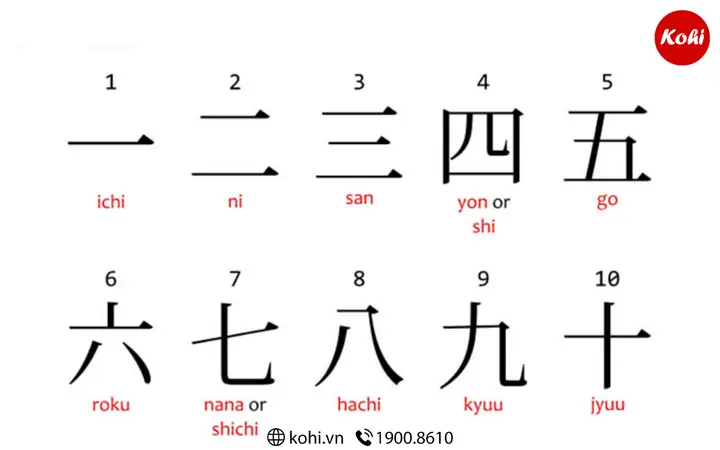
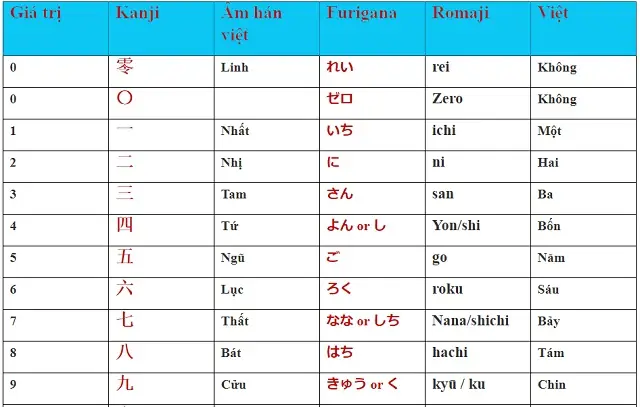
The foundation of any number‑reading skill lies in memorizing the basic digits from one to ten. In the Sino‑Japanese system, these are:
1 – ichi
2 – ni
3 – san
4 – shi (or yon)
5 – go
6 – roku
7 – shichi (or nana)
8 – hachi (or hat)
9 – ku (or kyuu)
10 – juu
Although “shi” and “shichi” are the standard Sino‑Japanese forms, many speakers prefer “yon” and “nana” to avoid homophones with words meaning “four” (死, death) and “seven” (死, also associated with death). The alternative “hat” for eight is rare and mostly heard in dialectal speech.
Numbers 11‑19
The teen numbers are formed by combining “juu” (ten) with the digit, separated by a space or sometimes hyphen. For example:
11 – juu‑ichi
12 – juu‑ni
13 – juu‑san
14 – juu‑shi / juu‑yon
15 – juu‑go
16 – juu‑roku
17 – juu‑shichi / juu‑nana
18 – juu‑hachi
19 – juu‑ku / juu‑kyuu

Có thể bạn quan tâm: Dịch Thuật Công Chứng Tiếng Nhật: Giá, Top, Review, Và Xu Hướng Mới Nhất Năm 2026
Notice that the compound is pronounced as a single word, and the pitch accent may shift, but the reading remains consistent.
Tens, Hundreds, Thousands
The Japanese numeral system is decimal, and each higher power of ten has a specific multiplier word:
- 20 – nijuu (ni + juu)
- 30 – sanjuu
- 40 – yonjuu (or shijuu)
- 50 – gojuu
- 60 – rokujuu
- 70 – nanajuu (or shichijuu)
- 80 – hachijuu
- 90 – kyuujuu
When constructing numbers above ten, the pattern is to place the multiplier before the base, similar to English “twenty,” “thirty,” etc. For numbers between multiples of ten, the digit is added after the tens word, e.g., 23 – nijuu‑san.
Hundreds
Hundreds are expressed with “hyaku” (百), which changes to “byaku” when following certain consonants, but the reading remains essentially “hyaku.” For example:
100 – hyaku
200 – ni‑hyaku
300 – san‑byaku (or san‑hyaku)
400 – yon‑hyaku (or shi‑hyaku)
500 – go‑hyaku
600 – roku‑hyaku
700 – nana‑hyaku (or shichi‑hyaku)
800 – hachi‑hyaku
900 – kyuu‑hyaku
Thousands
Thousands use “sen” (千). The pronunciation may become “zen” in some compounds, but generally it is “sen.” Examples:
1,000 – ichi‑sen
2,000 – ni‑sen
3,000 – san‑zen
4,000 – yon‑sen (or shi‑sen)
5,000 – go‑sen
6,000 – roku‑sen
7,000 – nana‑sen (or shichi‑sen)
8,000 – hachi‑sen
9,000 – kyuu‑sen
Có thể bạn quan tâm: Những Diễn Viên Nổi Tiếng Nhật Bản 2026: Tên Đỉnh Cao Trong Ngành Điện Ảnh Châu Á
Large Magnitude Units
Japanese employs unique words for larger powers of ten, which differ from the Western system. The most common are:
- 10,000 – man (万)
- 100,000 – juu‑man (十万)
- 1,000,000 – hyaku‑man (百万)
- 10,000,000 – sen‑man (千万)
- 100,000,000 – oku (億)
- 1,000,000,000 – juu‑oku (十億)
- 10,000,000,000 – hyaku‑oku (百亿)
- 100,000,000,000 – sen‑oku (千亿)
- 1,000,000,000,000 – chou (兆)
When reading numbers that include these units, the multiplier precedes the unit, similar to English “ten thousand.” For instance, 12,345 is read as “ichi‑man ni‑sen san‑hyaku yon‑juu‑go” (一万二千三百四十五). Notice that each segment is pronounced separately, and the word “to” is not used; instead, the units are concatenated.
Special Readings and Irregularities
While the Sino‑Japanese system is regular, there are several irregular readings that learners must memorize:
- The number “4” can be read as “shi” or “yon.”
- “Shi” is avoided in many contexts because it sounds like the word for “death.”
- “7” can be “shichi” or “nana.”
- “8” is usually “hachi,” but in some dialects “hat” appears.
- The number “10” is “juu,” but when combined with “ichi,” it becomes “juu‑ichi,” not “ichi‑juu.”
- In ordinal numbers, the suffix “‑me” (目) is added to the Sino‑Japanese reading, e.g., first – ichi‑me, second – ni‑me, third – san‑me.
- However, for numbers above ten, the suffix attaches to the entire compound, e.g., 11th – juu‑ichi‑me.
- The word “tsugi” (次) means “next,” and when used with numbers, it can imply “the next one,” e.g., “tsugi no ichi” (次の1).
Counters and Their Influence
Japanese uses a variety of counters (助数詞) that modify the reading of numbers depending on what is being counted. The most common counters include:
- “‑tsu” for general objects (e.g., hitotsu, futatsu)
- “‑ko” for small round objects (e.g., ichi‑ko, ni‑ko)
- “‑hiki” for animals (e.g., ichi‑hiki, ni‑hiki)
- “‑sai” for age (e.g., ichi‑sai, ni‑sai)
- “‑nen” for years (e.g., ichi‑nen, ni‑nen)
- “‑kai” for occurrences (e.g., ichi‑kai, ni‑kai)
When using counters, the number may be read in its Sino‑Japanese form, but sometimes the native reading is employed, especially with “‑tsu.” For example, “one book” is “ichi‑satsu” (using the counter “satsu”), whereas “one small round object” is “ichi‑ko.” The choice of counter influences the pronunciation and, in some cases, the meaning.
Reading Dates
Dates in Japanese follow a specific pattern: year, month, day. The year is read using the Sino‑Japanese system, often with the suffix “‑nen” (年). For example, 2026 is read as “ni‑sen ni‑juu‑roku” or more commonly “ni‑sen ni‑juu‑roku‑nen.” Months are expressed with “‑gatsu” (月), and days with “‑nichi” (日). Special readings exist for certain days: 1st is “tsuitachi,” 2nd is “futsuka,” 3rd is “mikka,” up to 10th “touka,” 11th “juu‑ichi‑nichi,” etc. These irregular forms must be learned individually.
Có thể bạn quan tâm: Cách Đọc Tiếng Nhật Mới Nhất 2026: Tổng Hợp Kiến Thức Về Hiragana, Katakana, Kanji Và Cách Phát Âm Chuẩn
Reading Years
When referring to historical years, Japanese often uses the era name combined with the year number. For instance, the year 2026 corresponds to the Reiwa era (令和). It can be expressed as “Reiwa kyu‑juu‑ichi” (令和九年) if using the Japanese imperial year count, or simply “2026” pronounced as “ni‑sen ni‑juu‑roku.” In casual conversation, people may say “sen ni‑juu‑roku” (2026) without the “ni‑sen” prefix.
Phone Numbers and Identification Numbers
Phone numbers are read digit by digit, often with the Sino‑Japanese readings. For example, the number 03‑1234‑5678 would be pronounced as “zero san, ichi ni san, go roku nana hachi.” In some contexts, “zero” may be omitted, and the digits are grouped for clarity.
Prices and Monetary Values
When stating prices, the word “yen” (円) is added after the number. The number itself follows the Sino‑Japanese reading. For instance, 1,000 yen is “sen en,” 2,500 yen is “ni‑sen go‑juu en.” The particle “ni” (に) may precede the amount to indicate “at,” e.g., “kore wa ni‑sen en ni kimasu” (this costs two thousand yen).
Ordinal Numbers
Ordinal numbers (first, second, third, etc.) are formed by adding the suffix “‑me” to the cardinal reading. However, there are exceptions: “first” can be “ichi‑me” or “hajimari,” “second” is “ni‑me,” but “third” is “san‑me.” For numbers beyond ten, the suffix attaches to the whole number, e.g., “juu‑ichi‑me” (11th). In formal contexts, the word “‑ban” (番) is used, e.g., “ichiban” (first), “niban” (second).

Có thể bạn quan tâm: Cách Đọc Ngày Trong Tiếng Nhật Mới Nhất Năm 2026: Bí Quyết Đọc Năm, Tháng, Ngày Chuẩn Như Người Bản Ngữ
Common Mistakes and Tips
Learners often confuse the readings of “shi” and “yon,” or “shichi” and “nana.” It is advisable to use “yon” and “nana” in most situations to avoid unintended connotations. Another frequent error is mispronouncing compound numbers by separating them incorrectly; remember that the tens and units are read together without pause. Additionally, the use of counters can change the reading, so practice with common counters is essential.
Practical Exercises
To solidify understanding, practice converting Arabic numerals to Japanese readings and vice versa. For example:
45 → yon‑juu‑go
328 → san‑hyaku ni‑juu‑hachi
7,612 → shichi‑sen roku‑hyaku juu‑ni
2026 → ni‑sen ni‑juu‑roku
Also, try reading dates: 2026/04/15 → ni‑sen ni‑juu‑roku, shi‑gatsu, juu‑go‑nichi.
Conclusion
Reading numbers in Japanese may appear daunting due to the presence of multiple reading systems, irregular forms, and counters. However, by systematically learning the basic digits, understanding the structure of compound numbers, and familiarizing oneself with common counters and special cases, one can achieve fluency. Consistent practice, especially with real‑world examples such as prices, dates, and phone numbers, will reinforce the correct pronunciations and boost confidence in both spoken and written Japanese.
Reading Fractions and Decimals
Fractions in Japanese are typically expressed by placing the numerator over the denominator with the particle “no”. For example, one half is “ichi no ni”, while one third is “ichi no san”. The denominator may be read using the Sino‑Japanese reading, and the word “bun” (分) can be added for clarity, as in “ni bun no ichi” (two‑thirds). Decimals are read by pronouncing each digit after the decimal point individually, using “ten” for the decimal point. Thus 3.14 is read as “san ten ichi yon”. In scientific contexts, the word “kichi” (桁) may be used to indicate decimal places.
Reading Percentages

Percentages are formed by adding the suffix “‑persento” to the number, borrowed from English, or by using the native word “‑wari” for tenths. For instance, 25% is “ni‑juu‑go persento” or “ni‑wari go”. When expressing percentages in formal writing, the character “%” is pronounced “percento”. The reading follows the Sino‑Japanese numeral system, and the word “wa” (は) may be inserted to indicate “as a percentage”.
Reading Time
Time is read using the Sino‑Japanese numbers for hours and minutes. The word “ji” (時) denotes hour, and “pun” (分) denotes minute. For example, 3:45 is “san‑ji yon‑juu‑go pun”. The particle “ni” (に) can be used to indicate “at”, as in “san‑ji ni” (at three o’clock). Quarter hours are expressed with “yon‑juu‑go pun” or “juu‑go pun”, and half hours with “san‑juu pun”. Special terms exist for “noon” (shōgo) and “midnight” (shinya). These terms are commonly used in scheduling and announcements.
Cultural and Historical Context
The Japanese numeral system has evolved from Chinese numerals, adapting to native linguistic features. Historically, the use of “man” (万) for ten thousand reflects the traditional grouping of numbers in East Asian mathematics. In classical literature, numbers often appear in poetic forms where the reading may differ from modern usage. Understanding these historical readings can provide insight into ancient texts and cultural practices.
Advanced Topics: Large Numbers and Scientific Notation
For extremely large numbers, Japanese uses the unit “chō” (兆) for one trillion, and “gō” (兆) for ten to the power of twelve. In scientific notation, numbers are expressed with “kakeru” (掛ける) for multiplication by powers of ten. For example, 3.2 × 10⁶ is read as “san ten ni kakeru roku”. Mastery of these advanced forms is essential for academic and technical communication. In engineering contexts, the unit “kilo” is often adopted as “kiro” for thousand.