
The process of converting a name from one language to Japanese is more than a simple transliteration; it involves an understanding of phonology, semantics, and cultural norms. In an increasingly globalized world, individuals and organizations often find themselves needing to render personal names, brand names, or place names into Japanese for purposes ranging from travel and business to academic research and creative writing. This guide provides a comprehensive overview of the techniques, considerations, and best practices for effectively converting names into Japanese, with particular attention to the linguistic and sociocultural context as of 2026.
1. Why Convert Names to Japanese?
Before delving into the mechanics, it is useful to examine the motivations behind name conversion. People may need to write their names on official documents, fill out forms, or communicate with Japanese speakers. In the corporate sphere, multinational companies adapt their brand names to resonate with Japanese consumers, while scholars transliterate names of historical figures for publication. Additionally, travelers, expatriates, and language learners often seek to “Japanize” their names to facilitate integration or to honor Japanese culture. Recognizing these drivers helps tailor the conversion process to the intended audience and purpose.
2. Phonetic vs. Semantic Approaches
Two primary strategies exist when converting a name: phonetic transliteration and semantic translation. Phonetic transliteration focuses on reproducing the sound of the original name using Japanese syllabaries (hiragana, katakana) or romanized letters. Semantic translation, on the other hand, seeks to convey the meaning of the name by selecting kanji characters that reflect its etymology. Each approach has its own set of advantages and challenges, and the choice often depends on the name’s function, the target audience, and cultural expectations.
2.1 Phonetic Transliteration
Có thể bạn quan tâm: Chinchin Tiếng Nhật Là Gì? Giải Thích Chi Tiết Nghĩa, Cách Dùng, Văn Hóa Hài Mới Nhất Năm 2026
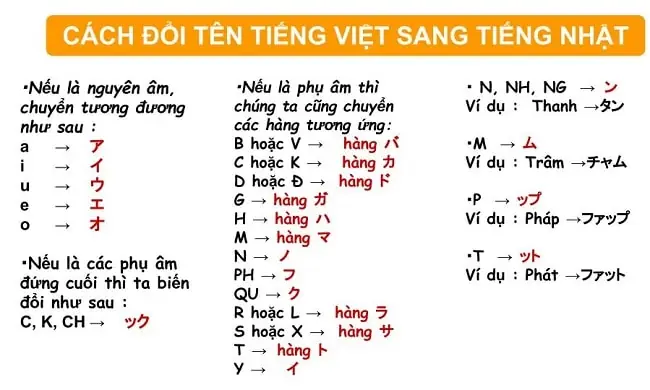
Phonetic transliteration is the most common method for foreign personal names, especially those without clear semantic components. The goal is to approximate the original pronunciation as closely as possible within the constraints of Japanese phonology. This typically involves:
- Katakana representation: Katakana is the syllabary reserved for foreign words and names, making it the default choice for many transliterations. For example, “Michael” becomes “マイケル” (Maikeru).
- Long vowels and double consonants: Japanese distinguishes between short and long vowels, and geminate consonants (e.g., “tt” in “Butler”) must be rendered with the small “tsu” (っ) to indicate a glottal stop or doubled sound.
- Choice of romanization system: The Hepburn system is the most widely used internationally, but alternative systems such as Kunrei‑shiki or Nihon‑shiki may be encountered. Consistency within a given context is crucial.
2.2 Semantic Translation
Semantic translation is more prevalent for names that carry inherent meaning, such as “Rose” or “Stone.” In these cases, the translator selects kanji that convey the same concept. For instance, “Rose” could be translated as “バラ” (bara) using katakana, or as “薔薇” (shōbei) using kanji, though the latter is less common for personal names. The choice between phonetic and semantic rendering often hinges on whether the name is intended to be recognized as foreign or integrated into Japanese cultural frameworks.
3. Romanization Systems and Their Implications
Romanization systems serve as intermediaries between non‑Japanese scripts and the Latin alphabet, and they influence how names are ultimately rendered in Japanese. The Hepburn system, revised in 1954 and updated in 1978, prioritizes intuitive pronunciation for English speakers. Consequently, “Smith” is transliterated as “スミス” (Sumisu). In contrast, Kunrei‑shiki would render the same name as “Sumisu” as well, but differences arise with sounds like “ti” (Hepburn: “chi”; Kunrei‑shiki: “ti”). Understanding these nuances is essential for ensuring consistency, especially in academic or official documents.

Có thể bạn quan tâm: Bảng Số Đếm Tiếng Nhật: Tổng Hợp, Cách Dùng Và Xu Hướng 2026
4. Katakana as the Default for Foreign Names
Katakana’s visual distinctiveness signals to Japanese readers that a word is of foreign origin. This is particularly useful for personal names, as it preserves the foreign identity while remaining pronounceable. However, some names may be rendered in kanji if they have established Sino‑Japanese readings or if the individual prefers a more integrated appearance. For example, the name “Alexander” can appear as “アレキサンダー” (Arekisandā) in katakana or as “亜历山大” (Reizan) in kanji, though the latter is rare in modern usage.
5. Selecting Appropriate Kanji
When kanji are employed, several factors guide the selection:
- On‑yomi (Sino‑Japanese reading) vs. Kun‑yomi (native Japanese reading): On‑yomi is often used for names of Chinese origin, while Kun‑yomi may be chosen for names with native Japanese roots.
- Semantic resonance: The kanji should reflect the name’s meaning or connotation. For example, “Bright” could be “明” (akira) or “光” (hikari), each carrying subtle differences in nuance.
- Avoidance of negative connotations: Certain kanji may have undesirable associations; thorough research is necessary to prevent unintended meanings.
6. Cultural Considerations and Social Norms
Japanese culture places high value on politeness, respect, and social harmony. When converting names, several cultural factors must be acknowledged:
Có thể bạn quan tâm: Bằng Tiếng Nhật Cao Nhất
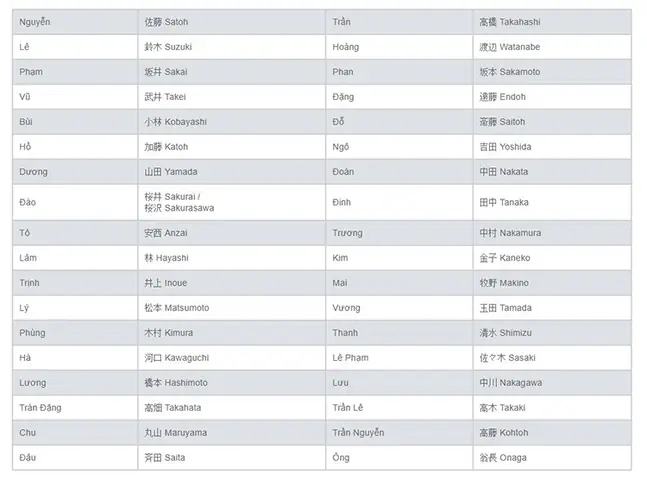
- Family name first: In Japanese, the family name precedes the given name. When transliterating a Western name, it is common to maintain the original order but to indicate the family name with a title such as “氏” (shi) or “さん” (san) in formal contexts.
- Honorifics: The suffix “‑san” is used generically, while “‑sama” conveys greater respect. For official documents, “‑dono” may appear. The appropriate honorific depends on the relationship between the speaker and the name’s owner.
- Gender associations: Some kanji or katakana spellings may be perceived as more masculine or feminine; awareness of these perceptions can affect how the name is received.
7. Practical Steps for Conversion
A systematic approach ensures accuracy and cultural appropriateness:
- Identify the name’s origin and purpose – Determine whether the name is personal, corporate, or geographic.
- Choose the conversion strategy – Phonetic, semantic, or a hybrid.
- Select the appropriate script – Katakana for foreign sounds, kanji for meaning, hiragana for grammatical particles.
- Apply romanization rules – Use a consistent romanization system.
- Verify pronunciation – Consult native speakers or reliable audio resources.
- Check for existing conventions – Many names have established Japanese forms (e.g., “Obama” → “オバマ”).
- Consider visual presentation – Ensure the chosen script fits the medium (e.g., business cards, websites).
8. Tools and Resources
A variety of tools facilitate name conversion:
- Online transliterators: Websites such as Jisho.org, Weblio, and specialized name converters allow users to input a name and receive multiple candidate renderings.
- Mobile applications: Apps like “Kana Converter” and “Name Translator” provide on‑the‑go solutions.
- Dictionaries: Bilingual dictionaries often include common name equivalents.
- Professional translation services: For high‑stakes documents, engaging a certified translator ensures accuracy and cultural nuance.
9. Common Pitfalls and How to Avoid Them
- Over‑reliance on automated tools: Algorithms may not capture contextual subtleties; always review output manually.
- Ignoring vowel length: Failing to mark long vowels can lead to mispronunciation (e.g., “Kōbe” vs. “Kobe”).
- Misapplying kanji: Using kanji with unintended meanings can cause confusion or offense.
- Neglecting cultural context: A name that is neutral in one culture may carry negative connotations in another.
10. Case Studies
10.1 Personal Name: “Emily”

Có thể bạn quan tâm: Chin Chin Tiếng Nhật: Nghệ Thuật Trình Bày Ẩm Thực Nhật Nhỏ Gọn
A straightforward phonetic transliteration yields “エミリー” (Emirī). However, if the individual prefers a more Japanese aesthetic, the kanji “恵美里” (Emi‑ri) could be considered, though this is less common.
10.2 Brand Name: “Starbucks”
The global coffee chain retains its English name but is often written in katakana as “スターバックス” (Sutābakusu) on menus and signage, preserving brand identity while ensuring readability.
10.3 Place Name: “San Francisco”
Typically transliterated as “サンフランシスコ” (Sanfuranshisuko). The long vowel in “San” is indicated by the macron or by doubling the vowel, but in katakana it is simply “サン”.

11. Legal and Official Considerations
When names appear on legal documents, passports, or official forms, adherence to government guidelines is essential. In Japan, the Ministry of Foreign Affairs provides specific instructions for transliterating foreign names, often recommending the Hepburn system for consistency. Failure to comply may result in processing delays or rejection.
12. Future Trends and Emerging Practices
As of 2026, several trends are shaping name conversion:
- Hybrid representations: Increasingly, individuals opt for a combination of katakana and kanji, reflecting both foreign origin and personal identity.
- Digital identity: Social media platforms allow users to set display names in multiple scripts, prompting more flexible conversion strategies.
- AI‑driven tools: Machine learning models are being trained to suggest culturally appropriate kanji based on name meaning and context, enhancing accuracy.
13. Conclusion
Converting names to Japanese is a multifaceted endeavor that balances phonetic fidelity, semantic intent, and cultural sensitivity. By understanding the underlying principles, leveraging appropriate tools, and remaining attuned to social norms, one can achieve a rendering that is both accurate and respectful. Whether for personal use, academic publication, or commercial branding, thoughtful name conversion fosters clearer communication and deeper cross‑cultural understanding in an interconnected world.